UCLA alum urges better use of driving suspensions
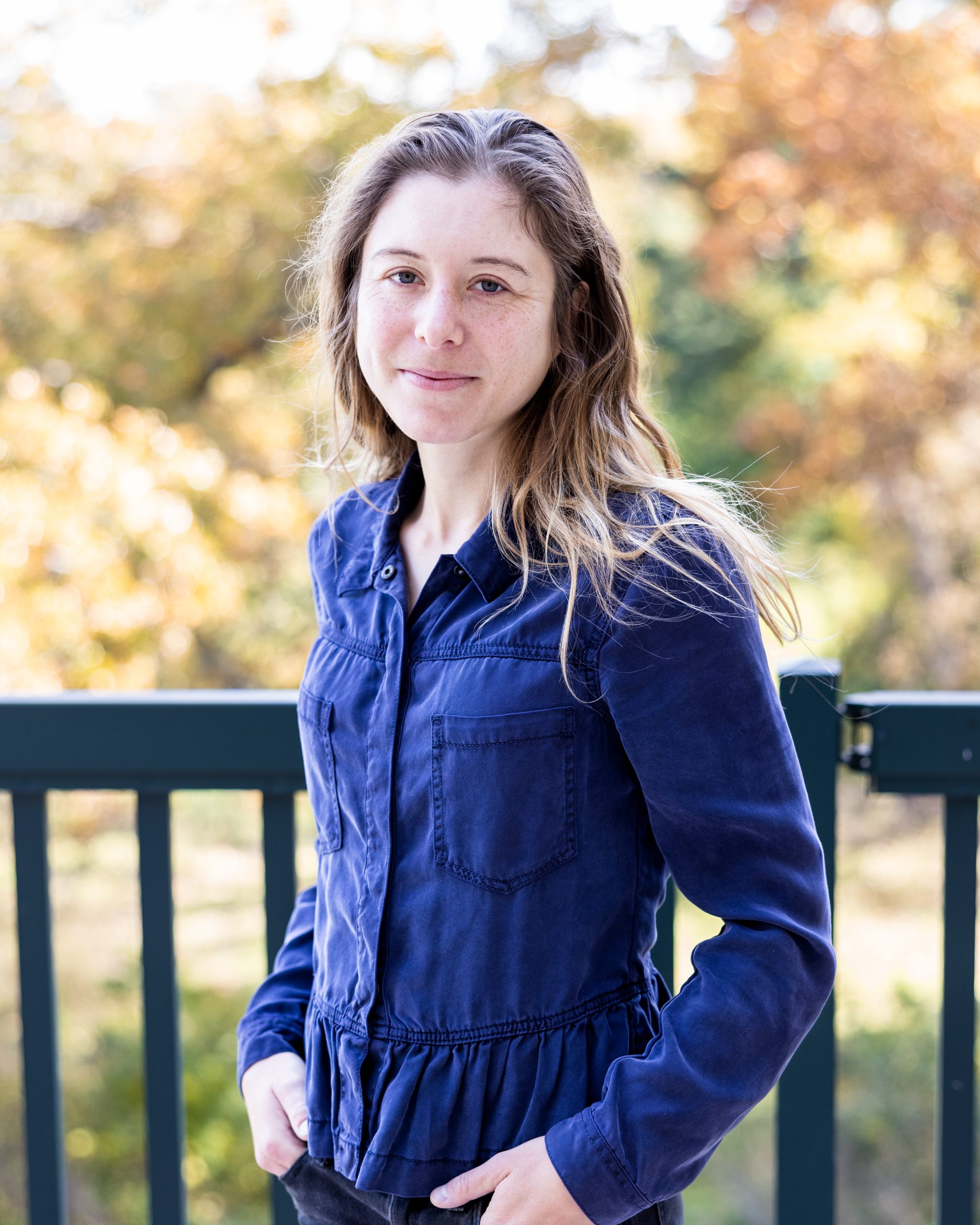
Miriam Pinski
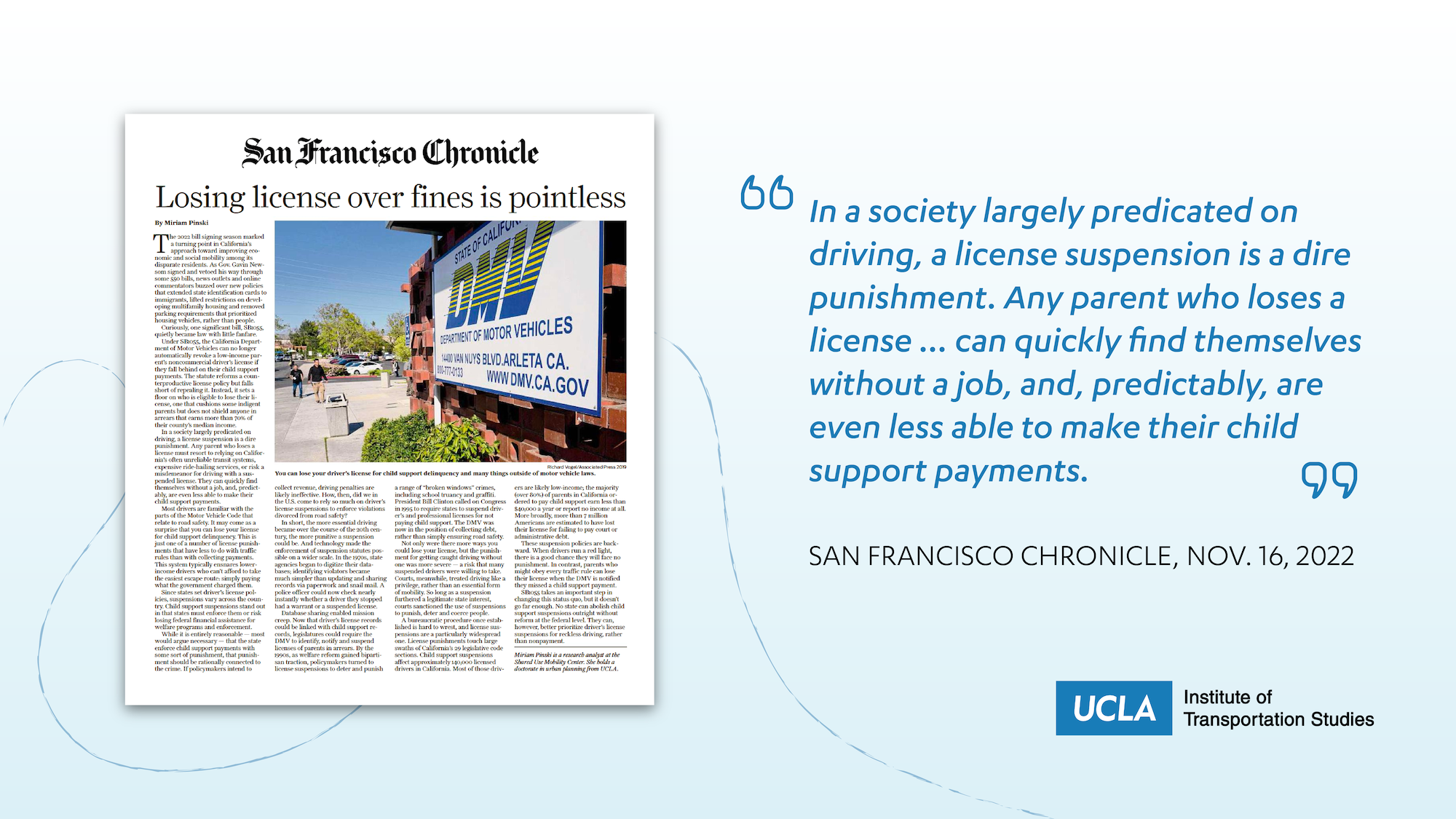
Miriam Pinski PhD ‘22 wrote an opinion piece for the San Francisco Chronicle arguing for better prioritization of driver’s license suspensions for reckless driving.
In September, the California Legislature passed and Gov. Newsom signed a bill that would bar the Department of Motor Vehicles from automatically suspending a low-income parent’s license for falling behind on child support.
Pinski wrote that Senate Bill 1055 is a small step toward reforming California’s system of license suspensions that have little — or nothing — to do with road safety.
For many Americans, automobility is essential to daily life, which has made the suspension of driver’s licenses an effective threat for a wide range of issues. For her dissertation, Pinski researched the history of driver’s licenses in California and how suspensions have been carried out for numerous non-driving-related violations.
Specifically, Pinski looked into the emergence of two license regimes. The first is for the Everyman, a term broadly used in the early 20th century to define the average, white, law-abiding citizen. Most drivers fall into this category: We take a driving test, periodically renew our license, and face suspension or traffic school when we break traffic laws.
The second is based on revenue and punishment. Here, a minority of Americans — more often lower-income drivers of color — may face a slew of punishments that have nothing to do with their driving record, but rather their inability to pay (such as child support delinquency). Drivers could also lose their licenses for not appearing in court, skipping school, graffiti, using a firearm, or engaging in prostitution.
“Any parent who loses a license must resort to relying on California’s often unreliable transit systems, expensive ride-hailing services, or risk a misdemeanor for driving with a suspended license,” Pinski wrote. “They can quickly find themselves without a job, and, predictably, are even less able to make their child support payments.”
More than driving, a license is a ubiquitous part of American society. Pinski explains how they came to be used as standard forms of identification often required for voter registrations, certain job applications, housing rentals, banking services, and more.
Note: Link to site below limits the number of stories you can access without subscribing.
Recent Posts
What if transportation abundance policy focused on access, not just mobility?
A transportation abundance agenda means rethinking investment and management so people can reach what they need, not just move faster or farther through inefficient systems.
UCLA student wins fourth consecutive national transportation prize
Nick Giorgio MURP ‘25 received the Neville Parker Award for his capstone project on intersection design and safety in Los Angeles.

Featured Content