New Transfers issue asks how we can best protect the vulnerable
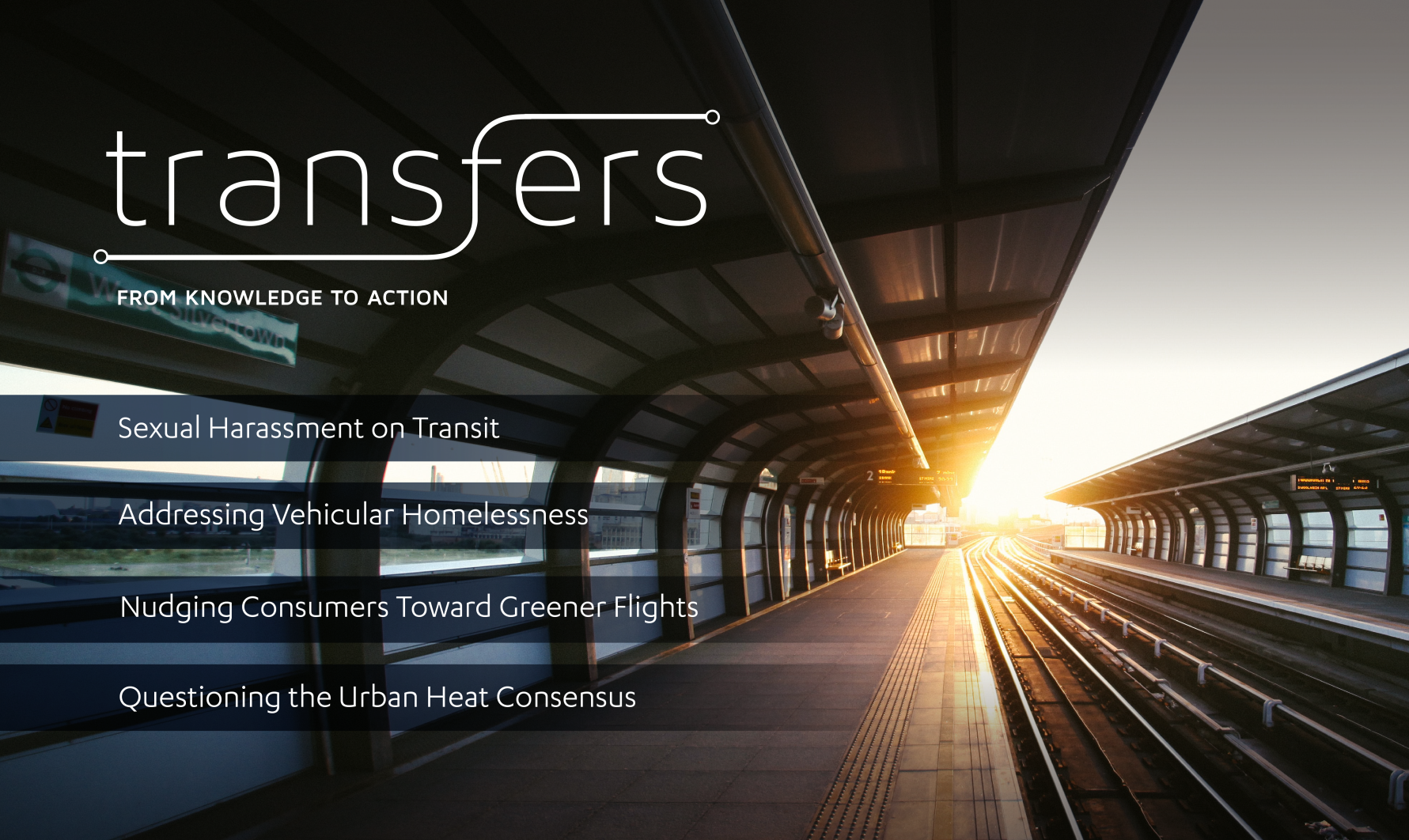
Transfers Magazine, the biannual digital magazine of the Pacific Southwest Region UTC edited by a team of UCLA faculty, staff and students, published its most recent issue earlier this month. In this edition of Transfers, we center our attention on how to orient policy toward protecting vulnerable communities. Incorporating insights from brand-new research, our slate of articles asks urgent questions: How can cities better handle vehicular homelessness? Is it possible to urge fliers to choose greener flights, shifting environmental outcomes in the process? Can we make public transportation safer, particularly for women?
All of the articles in this issue acknowledge that our world is far from perfect — but also that we, as policymakers and researchers, have the capacity to help rectify these concerns.
Check out the articles from the latest issue:
Editor’s Note
By Michael Manville
“Pssst, Babe, Will You Ride the Bus with Me?”
We know harassment is common on transit. Here, we examined just how common it is and how it varies globally and by systems.
By Anastasia Loukaitou-Sideris
Where You Go When Your Car is Home
In Los Angeles County, almost 40% of the unsheltered population live in their vehicles. Recently, cities have responded with strict restrictions against sleeping in vehicles and overnight parking. In this piece, we look at how parking regulations move – rather than solve – the problem.
By Madeline Brozen
A Nudge Toward Greener Flying
Could small nudges to consumer behavior lead to a more fuel-efficient sector? In a couple of UC Davis studies, the researchers found that people were willing to spend about $20 more for a flight with 100 kilograms fewer emissions than an alternative. It might not sound like much until you compare it to carbon offsets ($2.50 per ton).
By Nina Amenta and Angela Sanguinetti
Should Cities Use Cooler Pavements?
Climate scientists have known for decades that lighter-colored (high-albedo) materials will reflect sunlight rather than absorb it. In an attempt to offset the urban heat island effect, many cities have turned to cool pavement. But the presence of shade and vegetation can have a larger impact on local temperatures than the color of street surfaces.
By V. Kelly Turner, Ruth Engel, and Adam Millard-Ball
Transfers Magazine is a biannual research publication of the Pacific Southwest Region University Transportation Center, a federally funded network of eight partner campuses in Arizona, California and Hawaii. Transfers also features a year-round blog covering campus stories, research updates, student projects, news, events, opinions and more.
Recent Posts
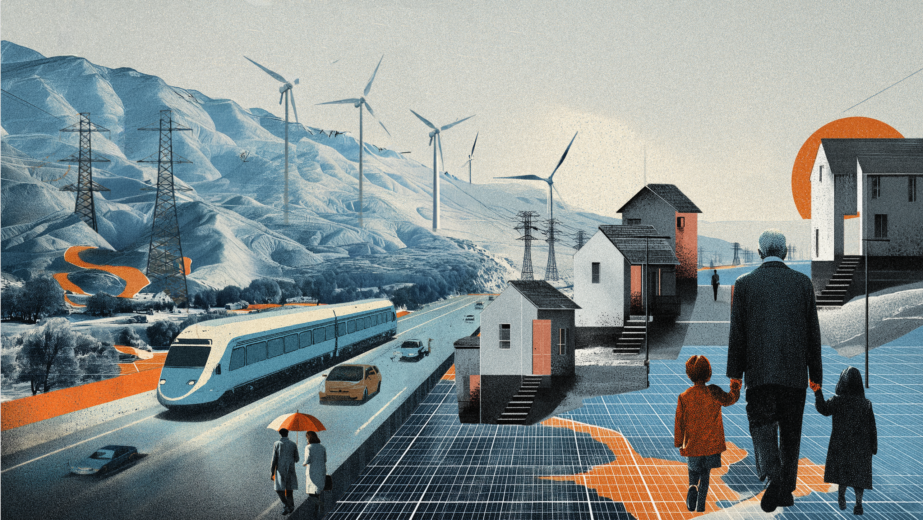
What if transportation abundance policy focused on access, not just mobility?
A transportation abundance agenda means rethinking investment and management so people can reach what they need, not just move faster or farther through inefficient systems.
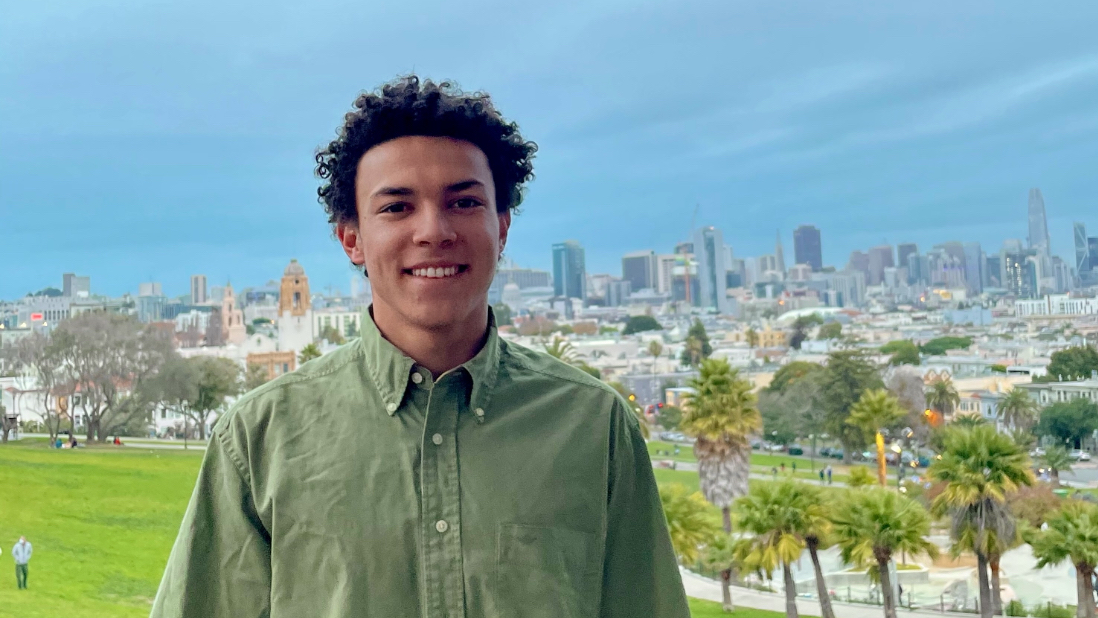
UCLA student wins fourth consecutive national transportation prize
Nick Giorgio MURP ‘25 received the Neville Parker Award for his capstone project on intersection design and safety in Los Angeles.

Featured Content