New research reveals stark inequities in EV charger access
by Jordan Grimaldi
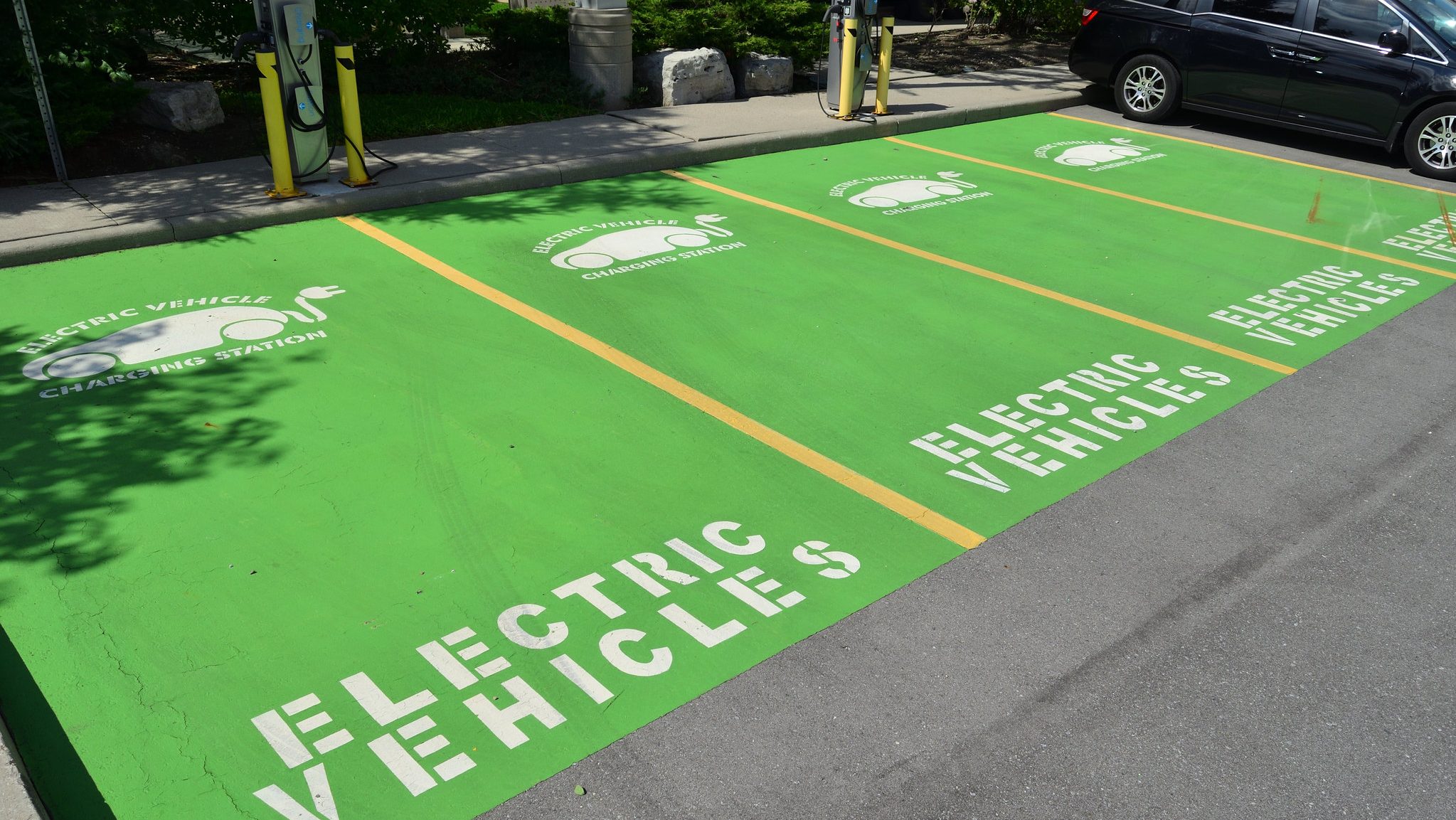
Electric vehicle charging stations (EVCSs) are critical to expanding clean vehicle adoption across the United States and meeting climate goals. Yet until now there’s been no comprehensive, nationwide understanding of where EVCSs are — and where they’re missing — across different communities.
A new study published in Nature Communications finds that both the distribution and reliability of EVCSs are extremely unequal in the U.S., with renters in disadvantaged communities experiencing the greatest gaps in access and service.
Researchers from UCLA and USC analyzed more than 470,000 EVCS online user reviews alongside charger location data from the U.S. Department of Energy to map network coverage and assess user experience. There are 55,000 public chargers in the continental U.S., but only 37,000 are fully accessible, the research found.
Innovative research methods were essential for quickly and strategically analyzing the massive data set. “We used AI to quickly analyze half a million user reviews, combined with mapping tools, to pinpoint where chargers are failing and who’s being left out,” said lead author Qiao Yu, a postdoctoral researcher at the UCLA Fielding School of Public Health.
The findings were stark: Disadvantaged communities had 64% fewer public EVCSs per capita within a 3-mile radius than more affluent areas. The disparity was even greater for renters in multifamily housing, who had access to 73% fewer chargers per capita relative to those in wealthier neighborhoods.

Mean public electric vehicle charging station (EVCS) 3-mile radius coverage in 2022, comparing renters in disadvantaged and non-disadvantaged communities.
The yellow columns represent disadvantaged communities, while blue columns represent non-disadvantaged communities. The light yellow state cells indicate states with statistically significant disparities, the light blue state cells indicate significant but without disparity, and the white cells represent non-statistically significant states. Disparity percentage is calculated by dividing the difference between disadvantaged and non-disadvantaged communities by the value in non-disadvantaged communities. Statistical significance was evaluated using the Mann–Whitney U test (two-sided). ***p < 0.001, **p < 0.01, *p < 0.05. Source: Yu, Q. et al. (2025). https://doi.org/10.1038/s41467-025-60091-y
Beyond gaps in coverage, the study also revealed inequities in user experience and service reliability. “EV chargers aren’t just missing in disadvantaged communities — they’re also more likely to be broken. That’s a double barrier for people who can’t charge at home,” said Yifang Zhu, professor in UCLA Fielding’s Department of Environmental Health Sciences and a study author.
User reviews pointed to frequent problems, like incorrect charging availability information, slow charging speeds, and long wait times — all issues that were more common in lower-income areas. Disparities in user experience were also present between urban and rural users, with urban users more likely to have more negative user reviews.
Addressing common user experience challenges is a critical element to scaling up EV adoption. If charging is inconsistent or inconvenient, drivers may be discouraged from switching to EVs — or may revert to gas-powered vehicles.
To support a more just transition to a carbon-free future, the researchers emphasize a need for smarter investment in charging infrastructure that addresses both access and reliability. This includes expanding fast-charging stations in underserved areas, improving charger maintenance through sustained funding, and adopting policies that lower financial barriers for lower-income communities.
Further Reading
For more on electric vehicles and the environment, check out this recent study from UCLA researchers on EV fast charging and pollutant hotspots.
Recent Posts
What if transportation abundance policy focused on access, not just mobility?
A transportation abundance agenda means rethinking investment and management so people can reach what they need, not just move faster or farther through inefficient systems.
UCLA student wins fourth consecutive national transportation prize
Nick Giorgio MURP ‘25 received the Neville Parker Award for his capstone project on intersection design and safety in Los Angeles.

Featured Content