From newcomers to scholars: HBCU students explore transportation research at UCLA
When Rolner Benjamin, Diana Origa, Kemari Solomon, and Leah DuBose arrived at UCLA in late June, they knew little about the field of transportation research. Eight weeks later, they are preparing to submit a paper on the spatial and demographic characteristics of low-emission vehicle users to a peer-reviewed journal.
The paper, which will be submitted this fall to Transport Policy, is the culmination of their work as participants in the “LEAP to Graduate Success” Summer Undergraduate Research Experience (LEAP-SURE). This program is an intensive undergraduate summer research program developed by Professor Tierra Bills, in collaboration with UCLA’s Institute of Transportation Studies, Center for Excellence in Engineering and Diversity (CEED), and the FAMU-FSU College of Engineering.
Bills, an assistant professor of civil and environmental engineering and public policy at UCLA, is alumna of Florida Agricultural and Mechanical University (FAMU). She was awarded a three-year grant through the UC Historically Black Colleges and Universities Initiative to train and prepare students from HBCUs for graduate-level education and research. The program was designed with the goal of inspiring HBCU students to pursue graduate studies in transportation engineering, planning, and policy through interdisciplinary research experiences, group learning and training, and mentorship.
It was this interdisciplinary approach that initially drew Origa, a rising junior and computer engineering major at FAMU, to the program. “I [was] looking for a niche that I could go into and thought [the program] would be a good opportunity to open my eyes to a different side of engineering,” she said.
Learn by doing
The program’s approach was to encourage students to “learn by doing,” Bills said. From the first week, students were integrated into several active projects under UCLA’s Transportation Equity Innovation (TrEI) Lab, where she is director. Over the summer, the students learned coding and data analysis techniques to tackle real-world questions such as how travel behavior differs between electric vehicle (EV) and non-EV owners, and how proximity to public chargers influences EV adoption.
Despite the program’s short duration, Bills was impressed with their work. “What they were able to do while they were here is quite remarkable,” she said. “They were able to come into a brand new field, learn new techniques and actually produce results.”
A second project the interns worked on was a pilot test of OpenPATH, an app-based travel data collection tool designed to capture daily travel activity information, user-initiated trip reports, and responses to system-prompted survey questions. The interns beta tested the app by tracking their own daily trips to investigate the app’s usefulness for collecting targeted data about the travel activities of underrepresented communities.
Examining their own travel behavior inspired the students to think about their daily lives — and connections to the world around them — in new ways.
“Transportation is something we deal with every day, and being in the program and learning more about it …I have a highlighted mindset of how the world is working when it comes to transportation infrastructure. Now I’m able to apply that in whatever I do next,” said Benjamin, a rising junior and biomedical engineering major at Florida State University.
Skills beyond transportation research
In addition to their transportation research, the students interacted with 20 other summer interns that participated in Amazon’s Summer Undergraduate Research Experience (SURE) @UCLA, which is directed by Catherine Douglas at CEED. Together, the interns all attended weekly trainings on topics such as applying for graduate fellowships, conducting literature reviews, delivering research presentations, and other career development areas.
As the students return to their Florida campuses, many of them are already thinking about how they can apply these types of transferable skills to future research. DuBose, a rising junior in biomedical engineering at FAMU, plans to use her new skills to support work she will be conducting this fall in a stem cell research lab.
“One of the main skills that I picked up is coding, which will play a vital role for me as I transition back into my biomedical interests,” DuBose said.
Out of all the highlights this summer, the students were in agreement on their biggest takeaway: the importance of teamwork and collaboration. Solomon, a rising senior in computer science at Florida State University, reflected on how the group supported each other.
“If we know we have to do a presentation tomorrow, we’re going to gather today to work on it and make sure nobody gets left behind,” Solomon said. “If one person goes, we’re all going to go together. So I think that’s been the biggest thing — holding each other up.”
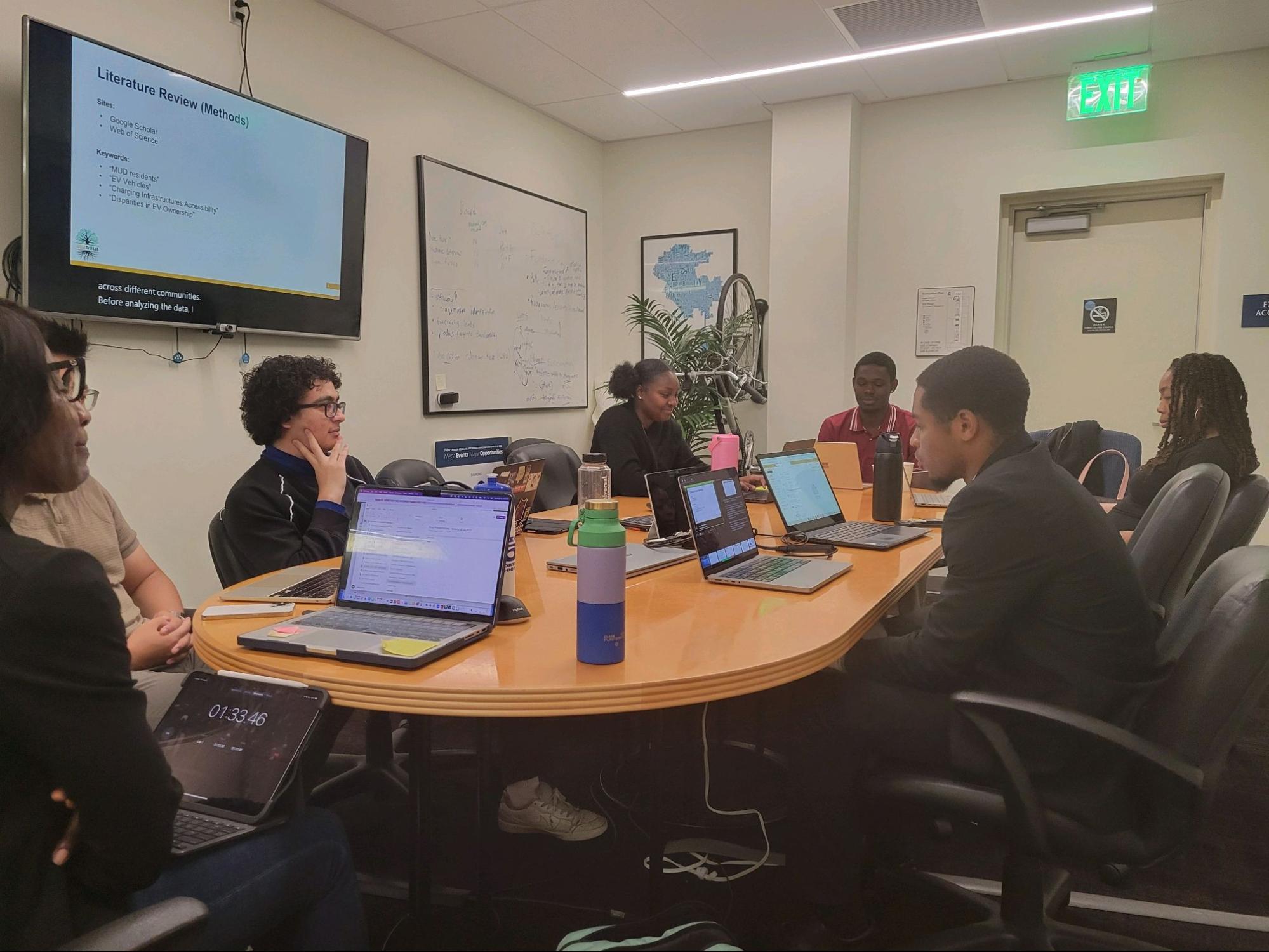
Interns, program staff, and graduate student mentors watch Rolner Benjamin as he gives his final presentation for the SPUR Research Showcase. (Credit: Tierra Bills)
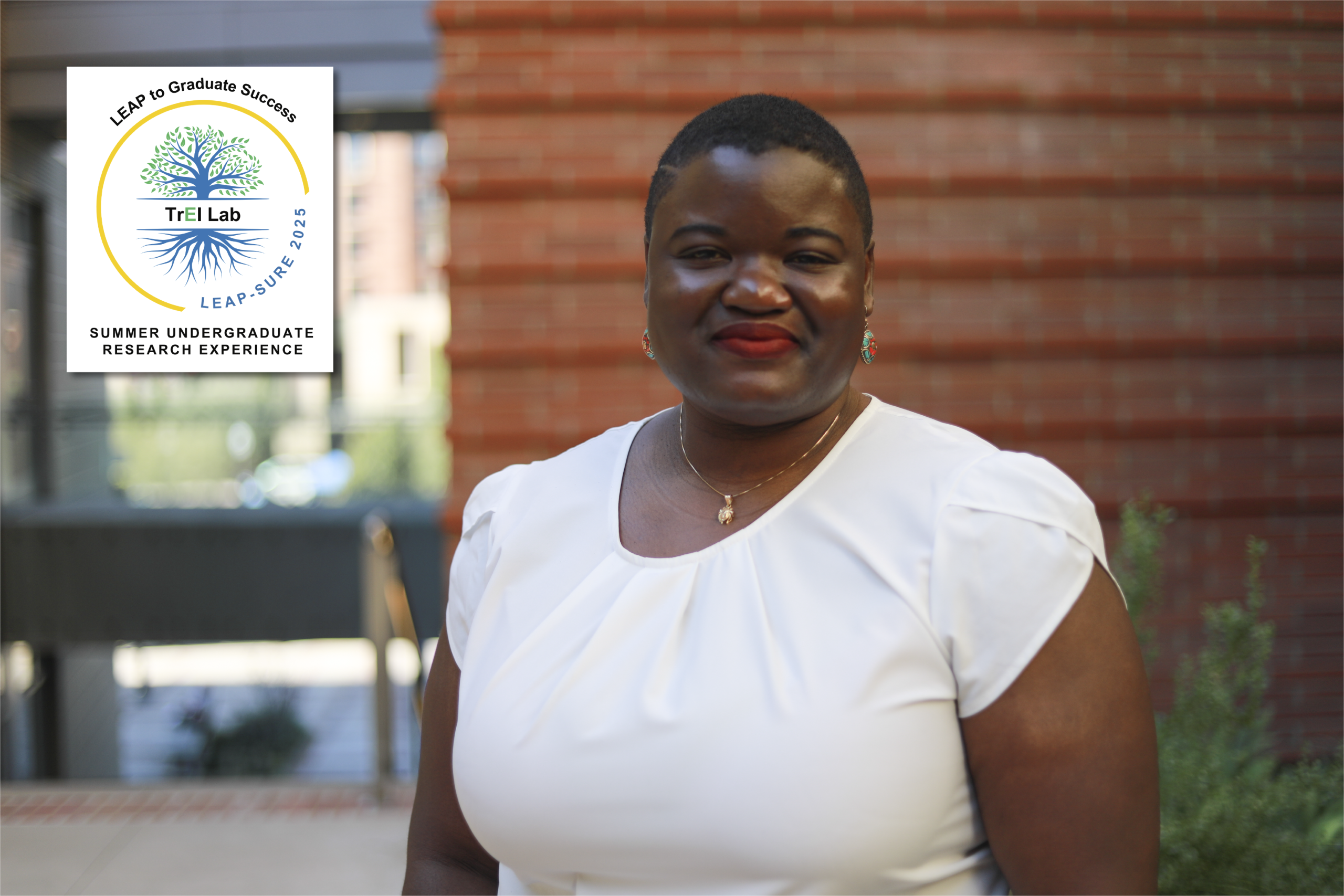
Assistant professor Tierra Bills oversees the LEAP to Graduate Success Summer Undergraduate Research Experience (LEAP-SURE), a program aimed at preparing HBCU students for graduate-level research.
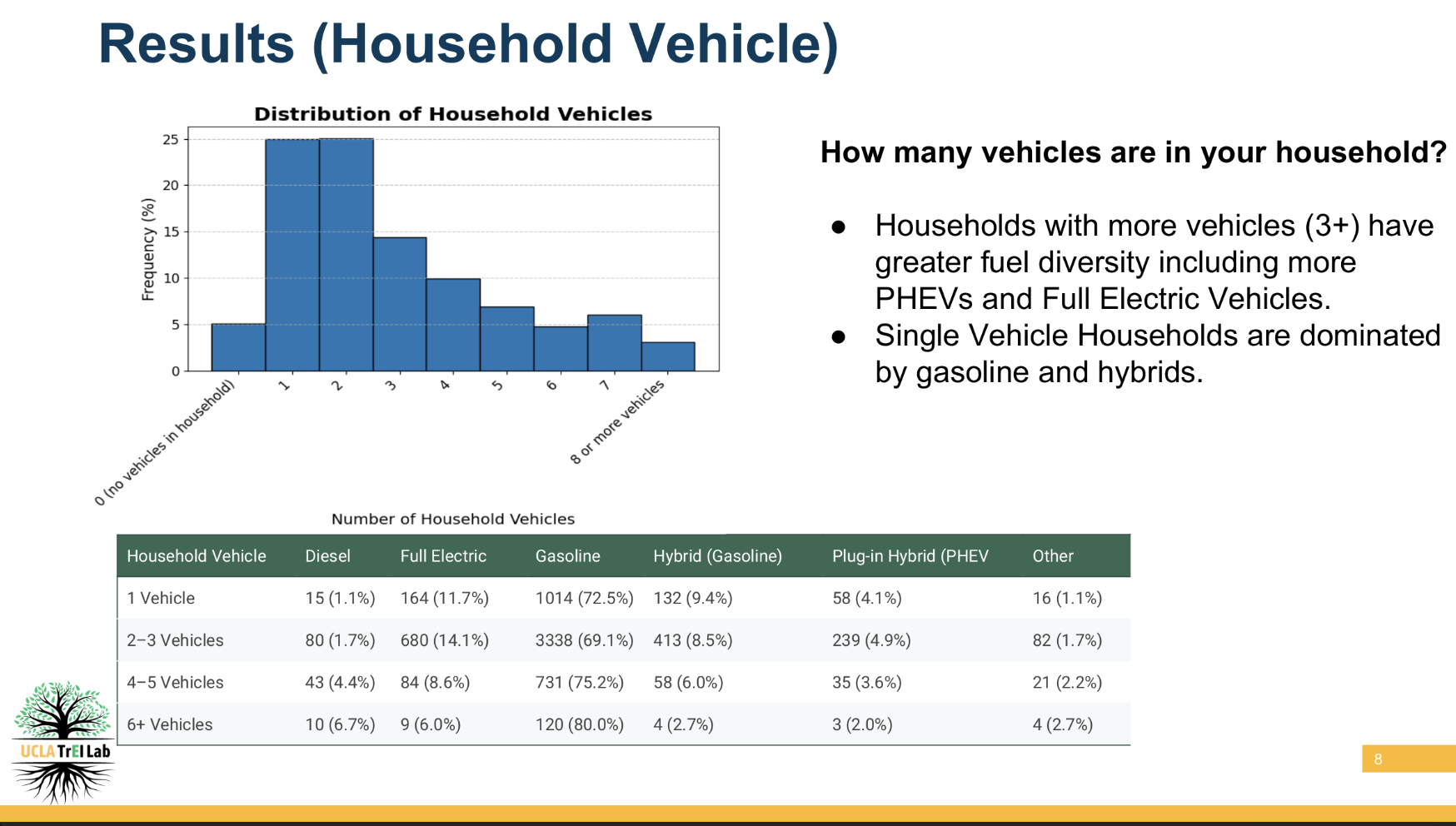
Slide from student presentation of summer project
Learn More
You can check out the research students conducted this summer here.
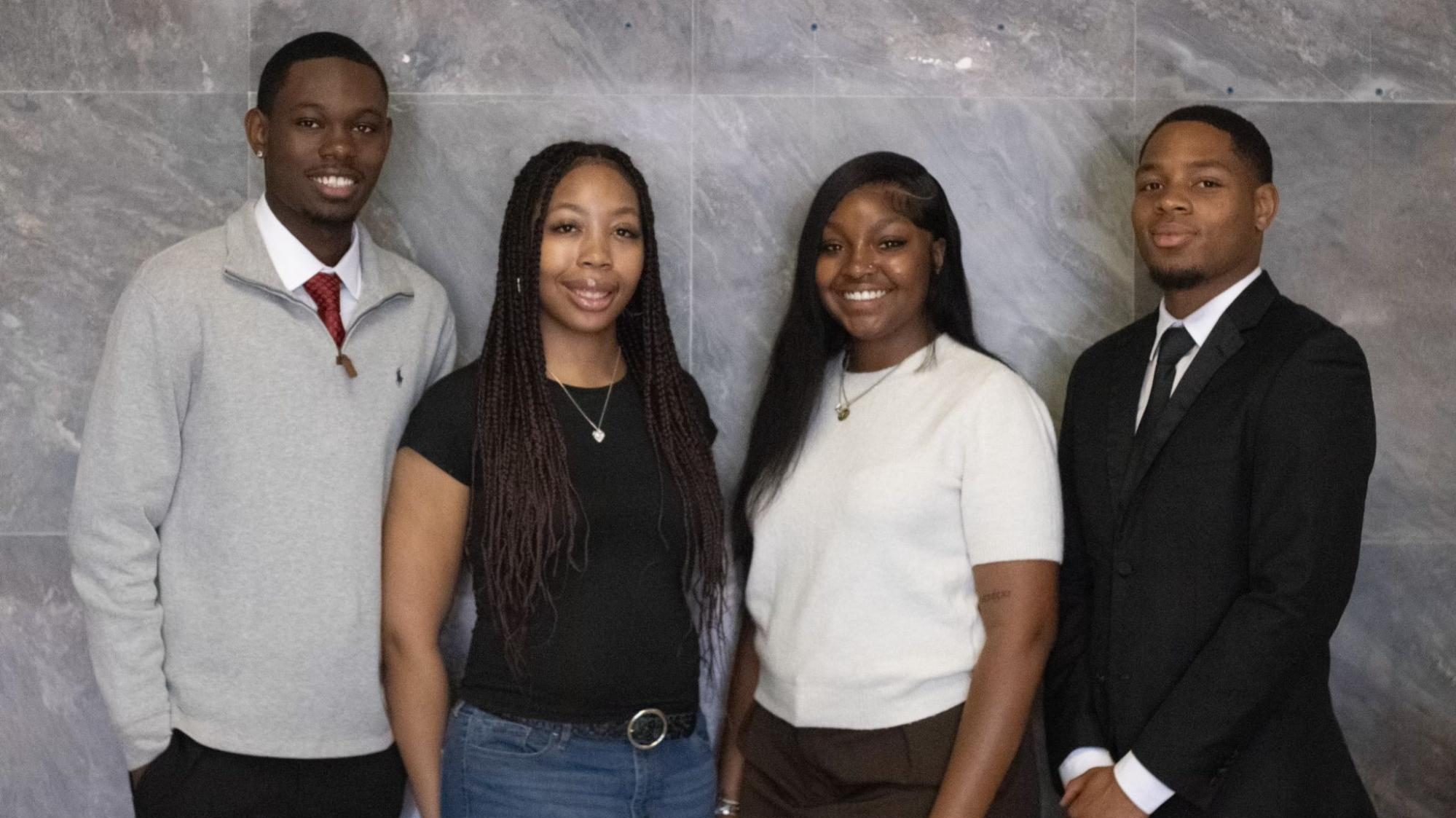
Featured photo (from left): Kemari Solomon, Diana Origa, Leah DuBose and Rolner Benjamin (Credit/Catherine Douglas)
Recent Posts

What if transportation abundance policy focused on access, not just mobility?
A transportation abundance agenda means rethinking investment and management so people can reach what they need, not just move faster or farther through inefficient systems.
UCLA student wins fourth consecutive national transportation prize
Nick Giorgio MURP ‘25 received the Neville Parker Award for his capstone project on intersection design and safety in Los Angeles.

Featured Content