

Freeways and floodwaters, UCLA researchers model climate risks of highway expansion
Freeways tore through countless communities of color across the U.S. in the mid-20th century. The impacts of the U.S. Interstate Highway era — from immediate displacement to long-term health and economic impacts — are well documented.
As climate change intensifies extreme weather events, less is known about how freeways themselves may exacerbate environmental hazards. A new UCLA Institute of Transportation Studies project is examining how highway expansions can worsen flooding, focusing on communities in California and Alabama.
Led by UCLA’s Regan Patterson, assistant professor of civil and environmental engineering, the multidisciplinary team is using spatial analysis and flood modeling to assess changes in flooding dynamics, community loss, and transportation network disruptions associated with highway expansion projects.
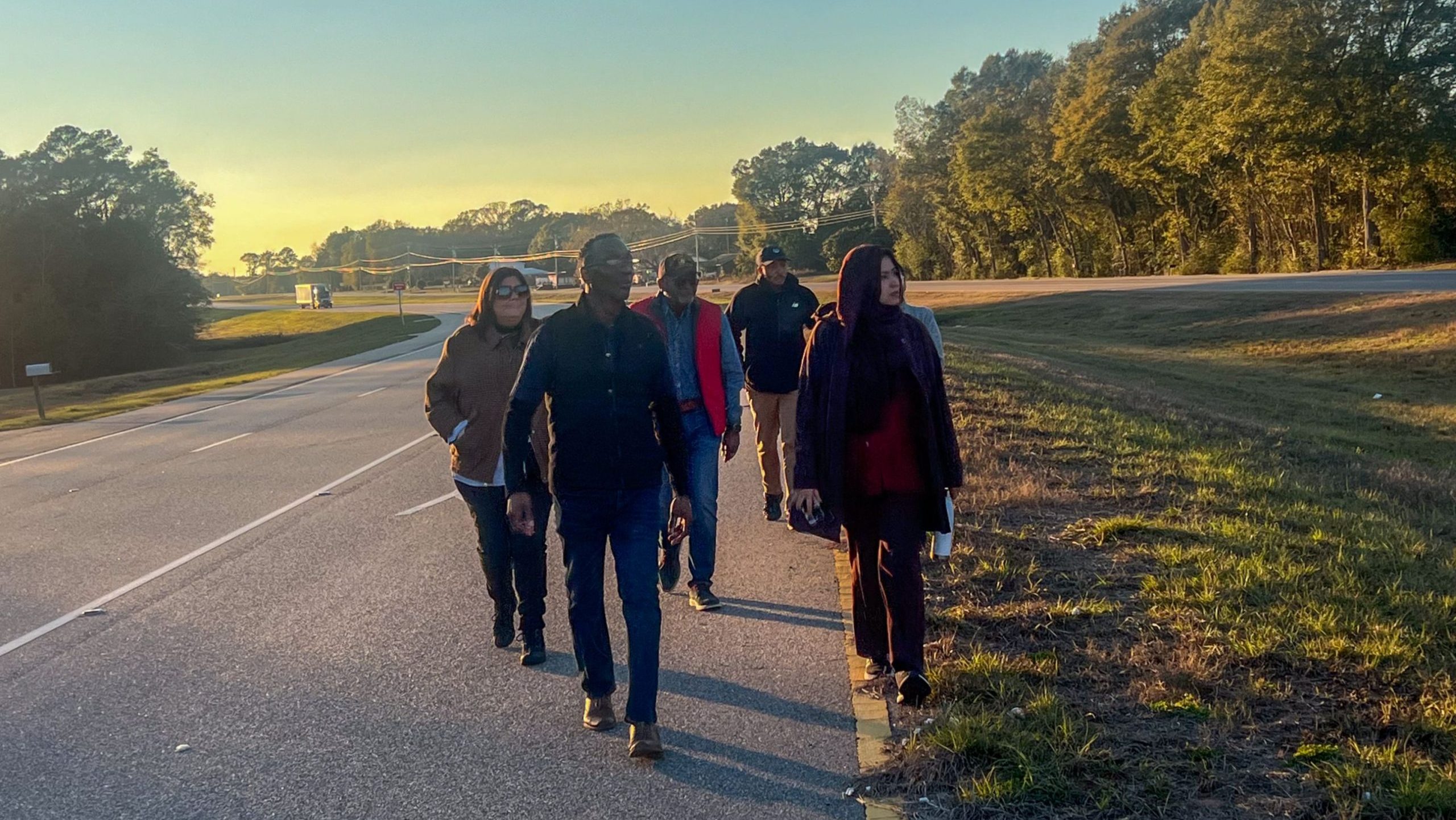
To ground these projections in community members’ lived experiences, Patterson and graduate student researcher Anika Tasnia joined colleagues from Texas Southern University’s Bullard Center for Environmental and Climate Justice for a site visit to Shiloh, a rural and historically Black community near Elba, Alabama.
“This site visit was essential, as the impact of transportation-induced flooding on residents and their homes could not be fully captured through pictures or stories,” Patterson said. “Only by witnessing it firsthand and engaging with the community did we truly grasp the magnitude and consequences of inadequate highway planning.”
For Shiloh, flooding was not a chronic problem prior to highway expansion. Since 2017, when U.S. Highway 84 was widened from two to four lanes and elevated 10-15 feet above nearby homes, the community has experienced repeated flooding. The highway design left Shiloh effectively sitting in a bowl. Unlike Elba, which has had a history of severe river flooding for more than a century, the Shiloh community was not prone to flooding until the expansion project was built.
The Bullard Center conducted a community health and resilience survey to document residents’ lived experiences, health concerns, and environmental priorities.
The work in Alabama is part of a project that examines how highway expansion projects influence flooding dynamics and community well-being in three locations: Oceanside and Sacramento, California, and Elba, Alabama. Together, these sites allow researchers to compare predicted and observed impacts across different geographies, climates, and stages of highway development.
The site visit will inform the next phase of the project, which will use community-sourced flood reports to ground-truth the modeling, improve predictions, and better understand local flood dynamics. This work will help inform policy recommendations and support ongoing advocacy for environmental justice and community resilience in transportation planning.
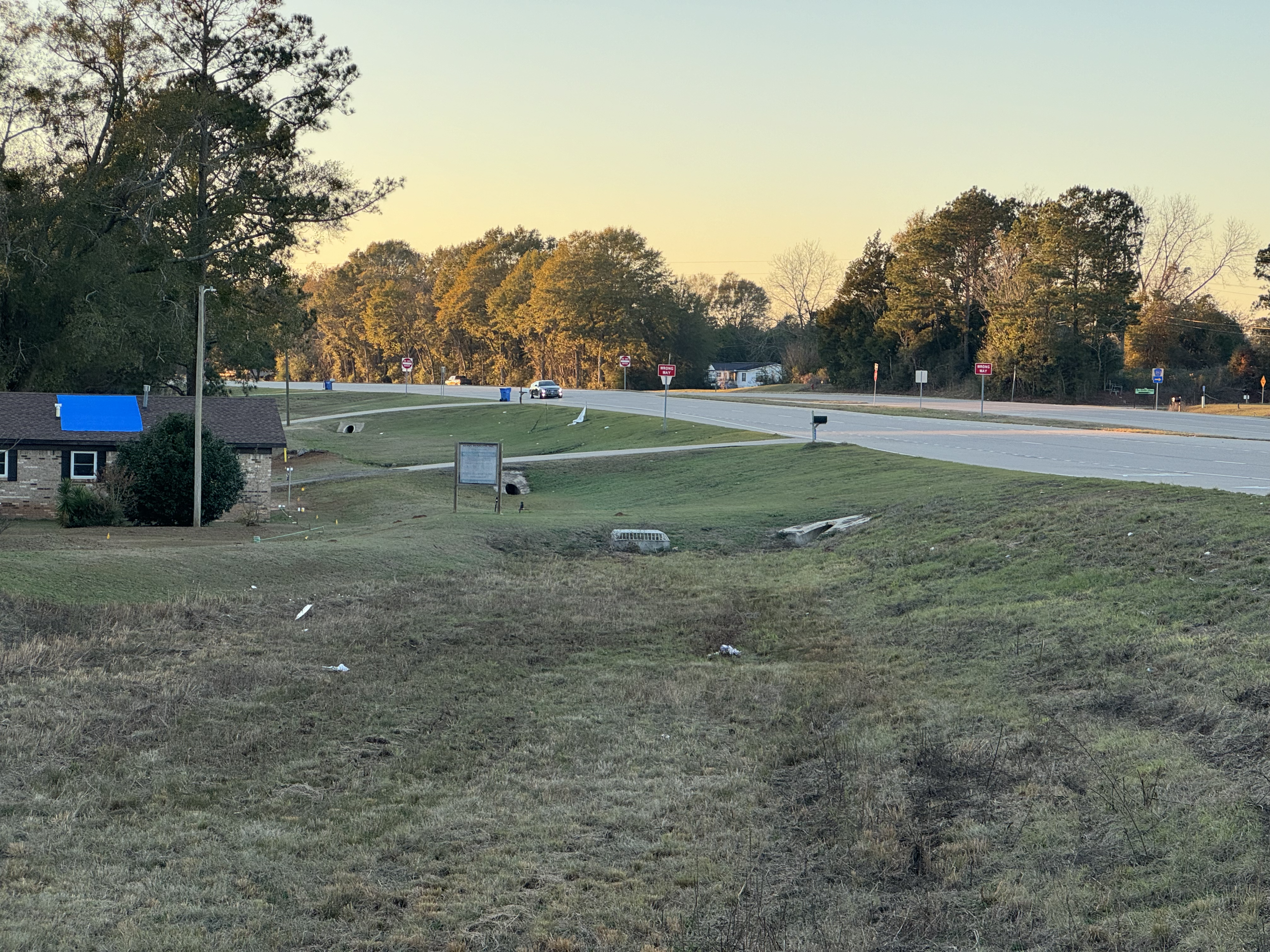
House in Shiloh, AL
A house in Shiloh, Alabama, which is repeatedly flooded since the expansion of US Highway 84 left it "sitting in a bowl."
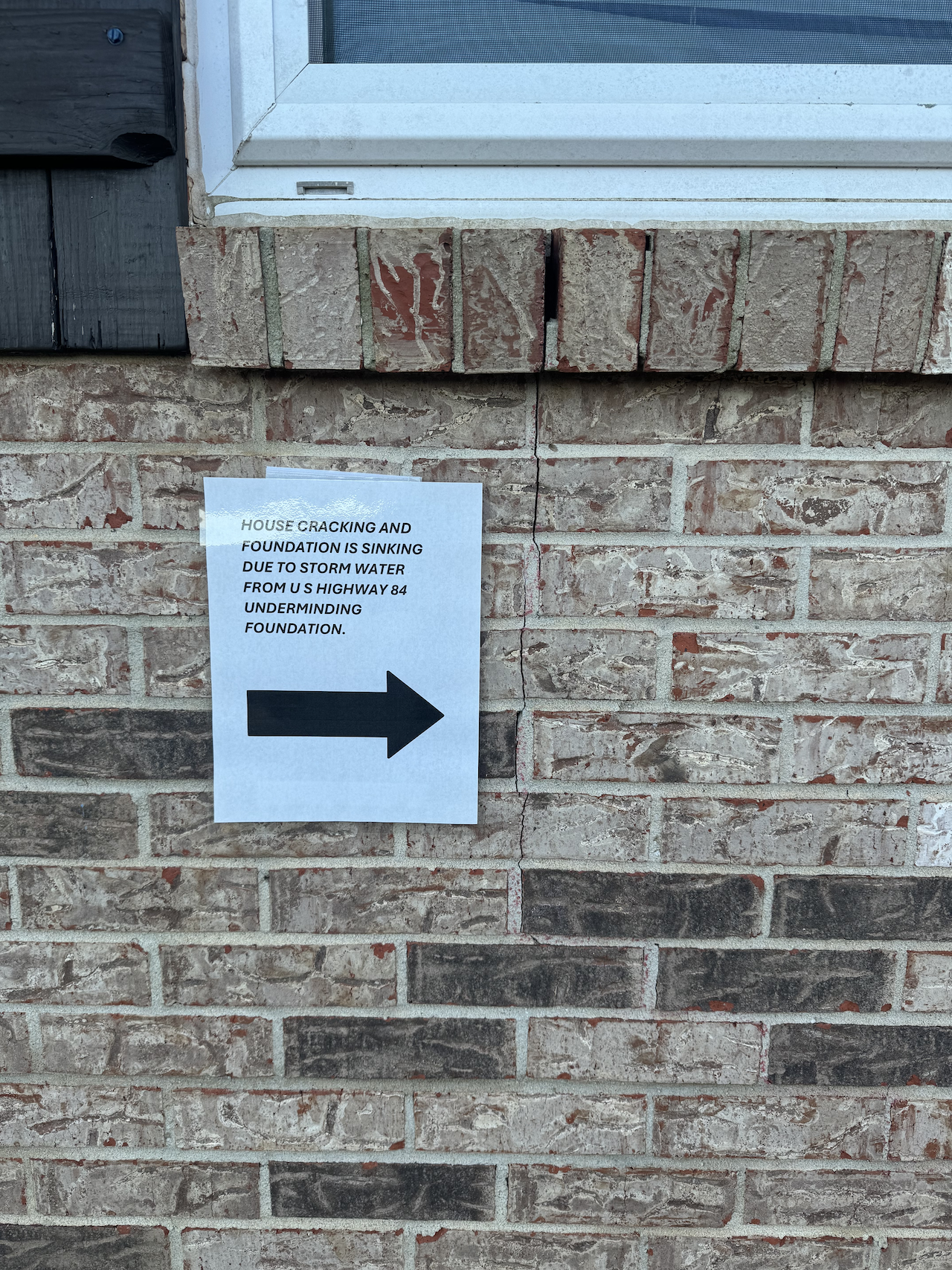
Sign
A sign points out the cracked foundation and sinking of this house. (Courtesy of Regan Patterson)
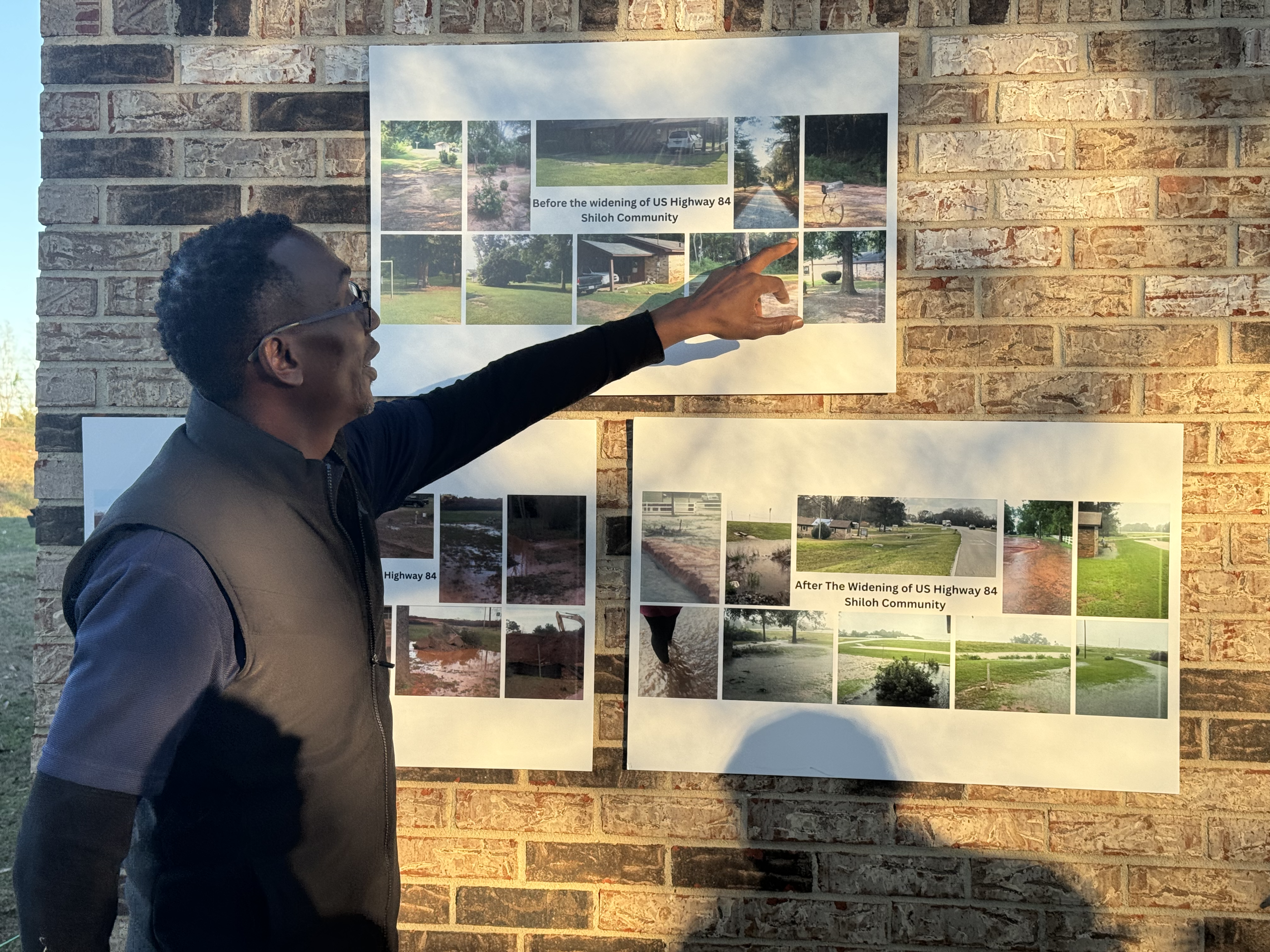
Before & After
Pastor Timothy Williams points out before and after effects of the highway expansion. (Courtesy of Regan Patterson)
Featured image: Pictured walking during a community site visit in Shiloh, Alabama are (from left) Dr. Liza Powers (Bullard Center), Pastor Timothy Williams (Shiloh community member), Dr. Robert Bullard (Bullard Center), Steven Washington (Bullard Center) and Anika Tasnia (UCLA). Courtesy: Bullard Center.
Further Reading
For more information on the generational legacies and impacts of highway construction, check out our California Freeway Siting project.
Recent Posts

What if transportation abundance policy focused on access, not just mobility?
A transportation abundance agenda means rethinking investment and management so people can reach what they need, not just move faster or farther through inefficient systems.
UCLA student wins fourth consecutive national transportation prize
Nick Giorgio MURP ‘25 received the Neville Parker Award for his capstone project on intersection design and safety in Los Angeles.

Featured Content







[…] Read Full Article Here PrevPreviousEno Concludes 2025 Leaders Development Conference NextWhat the ‘Abundance’ Agenda Could Mean For Equitable TransportationNext […]