New report: No such thing as free parking
In built-out cities and places where land costs are high, developers often meet minimum parking requirements through structured parking, rather than surface lots. Parking structures, however, are costly; in cities with the highest minimums, the required parking can cost nearly as much as the buildings themselves, and sometimes thwart development altogether.
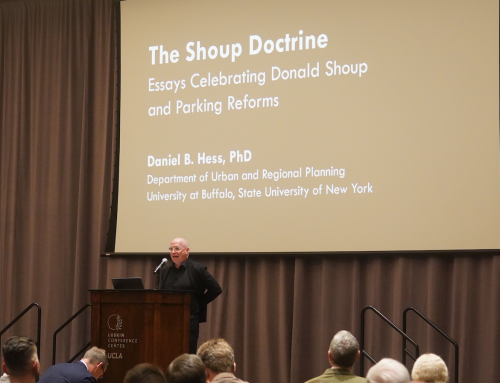
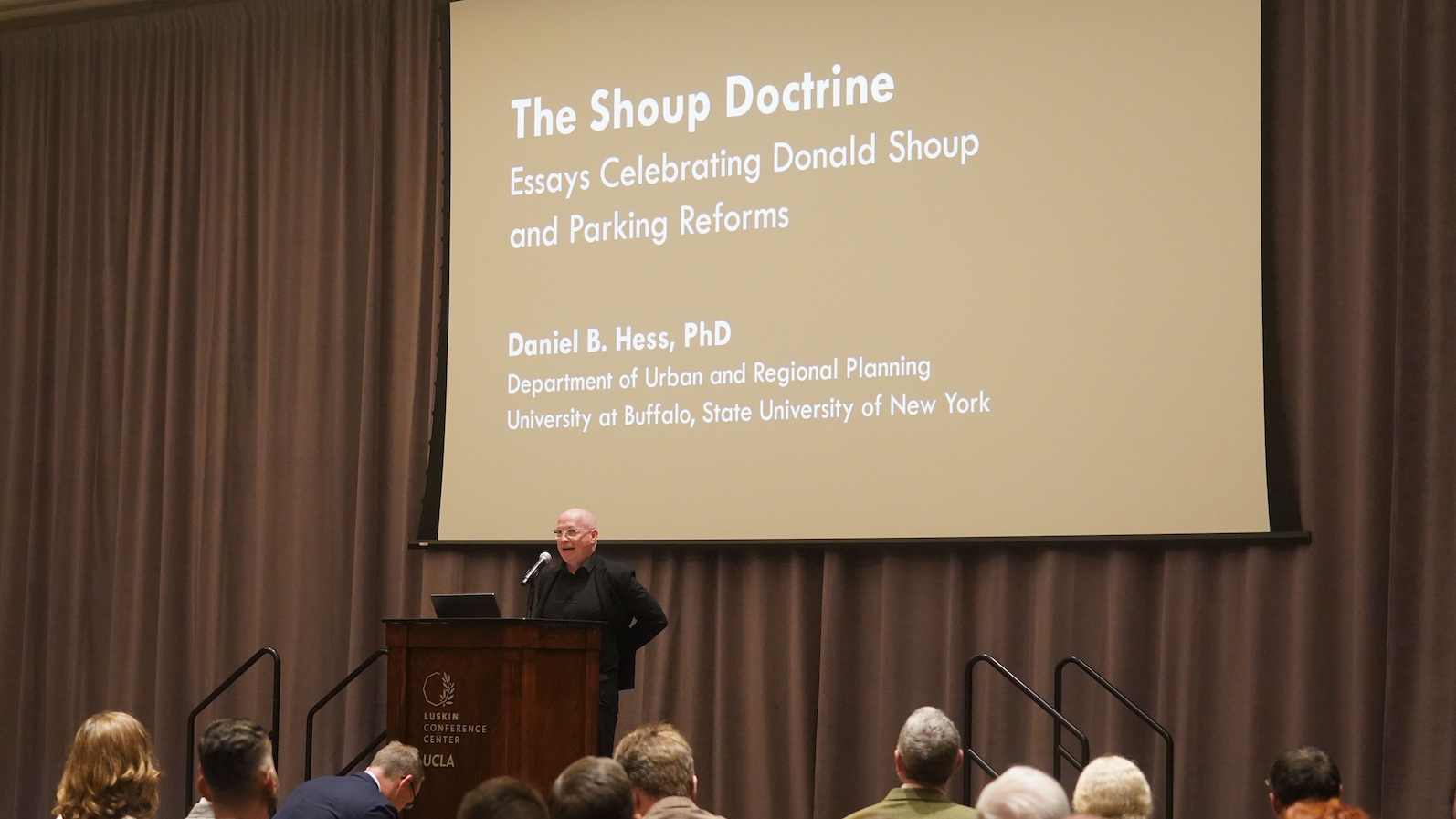
Our new report calculates the cost per structured parking space in 17 U.S. cities using 2025 construction cost data from Rider Levett Bucknall (RLB). It updates and expands on a similar analysis conducted by the late UCLA Professor Donald Shoup using 2012 RLB data, combining building and parking cost estimates with minimum parking requirements to show how these mandates can increase total construction costs across different building types.
Key Findings
- Since 2012, parking construction costs have risen about 50% faster than general inflation.
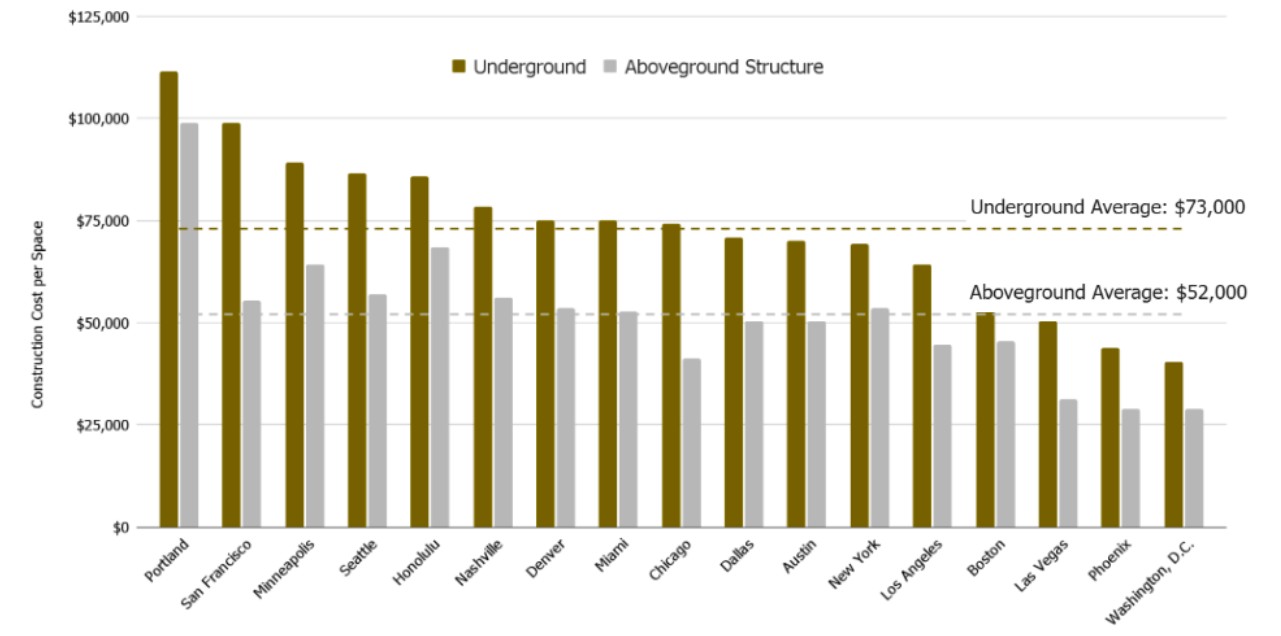
- The average cost of constructing underground parking is approximately $73,000 per space, excluding land costs, across the 17 cities analyzed. The cost ranged from $40,000 in Washington, D.C. to $111,000 in Portland, Oregon.
- Aboveground parking structures cost, on average, $52,000 per space, with costs ranging from $29,000 in Phoenix, Arizona and Washington, D.C., to $99,000 in Portland, Oregon.
- Required parking represents a substantial share of total construction costs. On average across seven cities, it accounts for 39% of office building and shopping center costs when provided underground and 31% when aboveground.
- For apartments, required parking can add roughly $50,000 to $100,000 per unit.
- Parking minimums can significantly raise total construction costs, relative to the cost of the building alone, across project types. For example:
- Office buildings: 68% more if the parking is underground, 47% more if aboveground
- Shopping centers: 70% more if underground, 49% more if aboveground
- 450-square-foot studio apartments: 39% more if underground, 26% more if aboveground
- Percentage increases in apartment construction costs attributable to required parking are generally greater for smaller apartments than for larger ones.
- Of the 17 U.S. cities with RLB cost estimates, at least 12 have either fully or partially eliminated minimum parking requirements in recent years, with most citing high construction costs as a key reason for reform.
Construction Cost per Parking Structure Space in 17 U.S. Cities
Policy Implications
Off-street parking requirements can increase building costs by forcing business owners and homebuilders to provide more parking than they otherwise would, which often means more parking than the market demands. Higher construction costs mean fewer projects make financial sense, since only buildings that can charge high rents or generate substantial returns from commercial activity are likely to be built. By discouraging new construction, parking mandates also drive up the cost of existing buildings, as more people compete for a limited supply of homes and commercial spaces. Minimum parking requirements especially discourage the construction of affordable apartments, because per-unit requirements disproportionately increase the cost of building smaller units. This report shows that parking not only accounts for a large share of overall construction costs, but that the costs have increased rapidly over the past decade.
The costs of parking construction are substantial, and our cost estimates provide a benchmark that helps illuminate the economic and development impacts of minimum parking requirements. Residents and businesses experience these costs not only through higher housing and commercial property prices, but also through fewer homes, stores, restaurants, and other businesses being built.
Recent Posts

What if transportation abundance policy focused on access, not just mobility?
A transportation abundance agenda means rethinking investment and management so people can reach what they need, not just move faster or farther through inefficient systems.

UCLA student wins fourth consecutive national transportation prize
Nick Giorgio MURP ‘25 received the Neville Parker Award for his capstone project on intersection design and safety in Los Angeles.

Featured Content